WebRTC vs HLS: Which Streaming Protocol Is Best for Low-Latency Broadcasting?
When it comes to low-latency live streaming, two protocols dominate the conversation in 2026: WebRTC and HLS (HTTP Live Streaming). If you're a radio DJ, online music streamer, podcaster, church broadcaster, school radio station, or live event producer, choosing the right protocol directly affects listener experience, stream reliability, and scalability.
But here’s the truth: there is no one-size-fits-all solution. WebRTC and HLS were designed for very different purposes. One prioritizes ultra-low delay. The other prioritizes stability and mass distribution.
In this detailed comparison, we’ll break down how each protocol works, compare their strengths and weaknesses, and help you decide which is best for your broadcasting setup.
What Is WebRTC and How Does It Work?
WebRTC (Web Real-Time Communication) is a real-time streaming protocol originally designed for peer-to-peer communication directly in web browsers. It enables ultra-low latency audio, video, and data streaming without requiring plugins or external players.
How WebRTC Works
WebRTC creates a direct connection between users using technologies like:
- • SRTP (Secure Real-Time Transport Protocol)
- • ICE (Interactive Connectivity Establishment)
- • STUN/TURN servers for firewall traversal
Unlike traditional streaming methods that send content through a central media server for distribution, WebRTC can establish near-instant connections between broadcaster and viewer.
WebRTC Latency
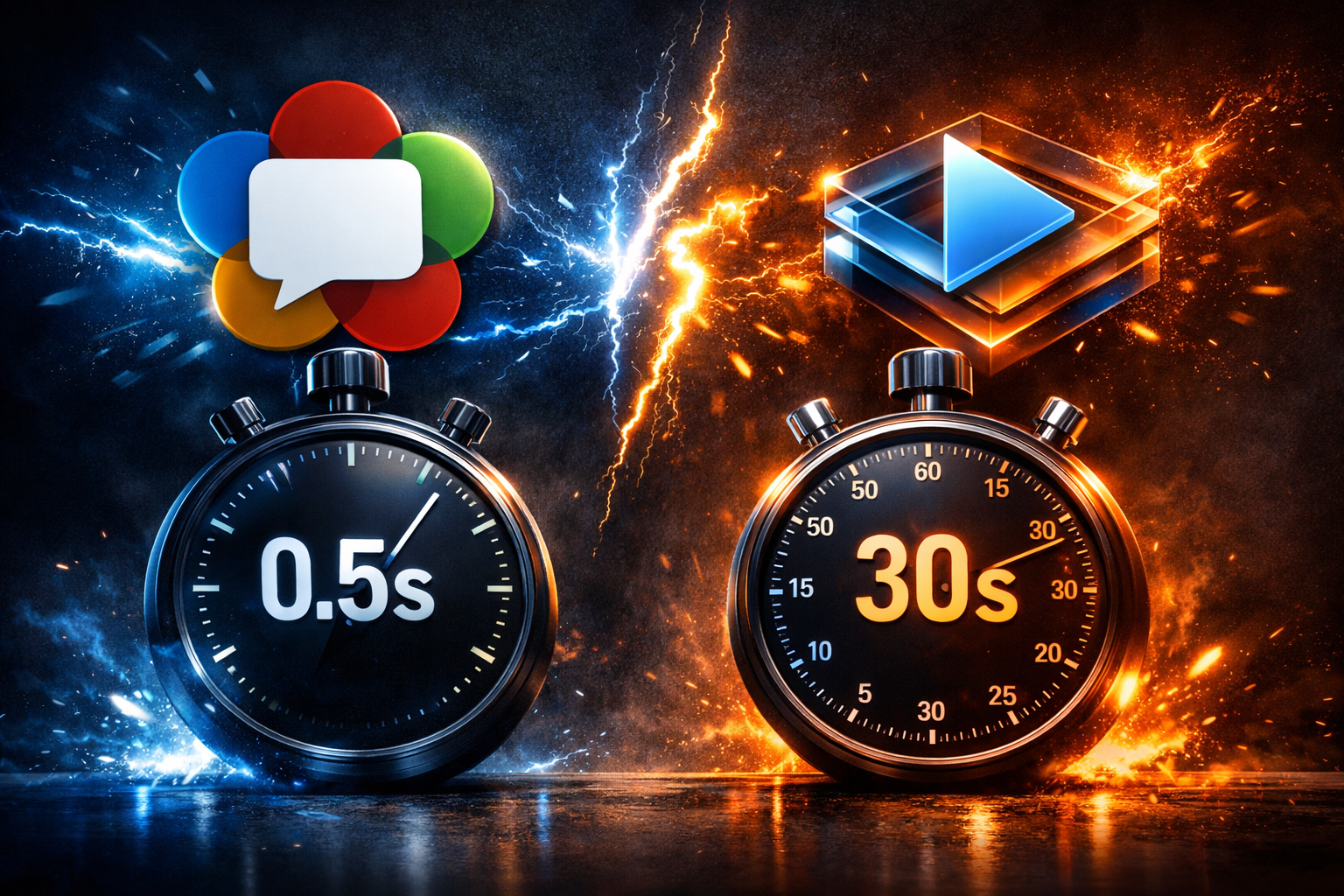
WebRTC typically delivers sub-1 second latency. In many cases, delay is between 200–500 milliseconds. That makes it ideal for:
- • Live auctions
- • Interactive classrooms
- • Video conferencing
- • Real-time audience participation events
Limitations of WebRTC
While WebRTC is incredibly fast, it has trade-offs:
- • Harder to scale to thousands of listeners
- • Higher server resource usage
- • More complex infrastructure
- • Not ideal for large radio audiences
Pro Tip
If you’re running a traditional internet radio station and don’t need sub-second interaction, WebRTC may be unnecessary. Most radio broadcasters benefit more from scalable protocols like HLS delivered via Shoutcast hosting or Icecast hosting.
What Is HLS Streaming?
HLS (HTTP Live Streaming) was developed by Apple and has become one of the most widely supported streaming protocols worldwide. It works by breaking live streams into small HTTP-based segments (usually 2–6 seconds long).
How HLS Works
Instead of delivering a continuous stream like WebRTC, HLS:
- • Splits content into small .ts segments
- • Delivers them over standard HTTP
- • Uses adaptive bitrate streaming
Because HLS uses regular web servers and CDNs, it scales extremely well. This is why it powers major platforms and IPTV services.
HLS Latency
Standard HLS latency ranges from 5 to 30 seconds. However, modern Low-Latency HLS (LL-HLS) can reduce delay to around 2–5 seconds.
Why HLS Is Popular for Radio
- • Works on nearly every device
- • Firewall-friendly (uses HTTP/HTTPS)
- • Scales to unlimited listeners
- • Stable even on weak connections
At Shoutcast Net, our streaming infrastructure supports scalable distribution with 99.9% uptime, SSL streaming, and plans starting at just $4/month.
Pro Tip
If your priority is reliability, mass audience reach, and affordability, HLS delivered through professional streaming servers is often the smarter choice. You can even try it free for 7 days before committing.
WebRTC vs HLS: Side-by-Side Comparison Table
| Feature | WebRTC | HLS | Low-Latency HLS | Shoutcast | Icecast |
|---|---|---|---|---|---|
| Typical Latency | 0.2–1 sec | 5–30 sec | 2–5 sec | 5–15 sec | 5–20 sec |
| Scalability | Limited without SFU | Excellent (CDN-based) | Very Good | Excellent | Excellent |
| Server Load | High | Low | Moderate | Optimized | Optimized |
| Firewall Friendly | Sometimes problematic | Yes (HTTP/HTTPS) | Yes | Yes | Yes |
| Best For | Interactive streaming | Mass broadcasting | Sports, events | Online radio | Online radio |
Pro Tip
For radio broadcasters and DJs, Shoutcast or Icecast over HLS-style delivery provides the best balance of affordability, stability, and audience scalability. Explore plans in our streaming shop.
Latency, Stability, and Performance Differences
1. Latency
WebRTC wins on raw speed. If real-time interaction is mission-critical, it’s unmatched.
HLS, however, provides acceptable delay for most radio and church broadcasts where interaction isn’t instant.
2. Stability
HLS streams buffer segments ahead of playback. This creates smoother playback on unstable connections. WebRTC does not buffer heavily, making it more sensitive to packet loss.
3. Performance at Scale
Scaling WebRTC to 1,000+ listeners requires complex SFU/MCU infrastructure. HLS and Shoutcast-based systems are built for mass broadcasting and can support unlimited listeners when hosted correctly.
That’s why professional radio stations typically rely on dedicated streaming providers instead of building custom WebRTC systems from scratch.
Pro Tip
If you're monetizing your stream or broadcasting important events like church services or sports commentary, stability matters more than shaving off 3 seconds of delay.
Best Use Cases for Radio, Churches, and IPTV
Online Radio Stations
Best choice: Shoutcast or Icecast over HLS-style distribution. You get stability, AutoDJ support via AutoDJ, and low monthly costs.
Church Live Streaming
If audience interaction is minimal, HLS ensures smooth playback for elderly viewers and mobile users.
School Radio Stations
HLS-based radio streaming is simple, affordable, and easy to manage without complex networking setups.
Live Auctions or Interactive Events
WebRTC is better suited due to ultra-low delay requirements.
IPTV & Sports
Low-Latency HLS strikes a balance between scale and responsiveness.
Pro Tip
Most radio broadcasters don’t need sub-second latency — they need dependable uptime and easy management. That’s where managed Shoutcast hosting shines.
Which Protocol Should You Choose in 2026?
Here’s the simplified answer:
- • Choose WebRTC if you need ultra-low latency and real-time interaction.
- • Choose HLS if you need reliability and scalability.
- • Choose Shoutcast or Icecast hosting if you run an online radio station.
For most DJs, podcasters, churches, and school broadcasters, professional streaming hosting offers the best value. With Shoutcast Net, you get:
- • Plans starting at $4/month
- • 7-day free trial
- • 99.9% uptime guarantee
- • SSL-secured streaming
- • Unlimited listeners
- • Built-in AutoDJ
Instead of building complex infrastructure, you can focus on what matters: creating great content and growing your audience.
Ready to launch or upgrade your station? Start your free 7-day trial today or explore affordable plans in our streaming shop.
Final Pro Tip
In 2026, the winning strategy isn’t just about latency — it’s about delivering consistent, high-quality audio to every listener, on every device, every time.